Choosing the right SEO software has become more complicated as search continues to evolve. Small businesses are no longer optimizing only for traditional Google rankings—they also need to think about how their brands and content appear in AI-powered search experiences.
The best AI SEO tools for small businesses combine traditional SEO capabilities with artificial intelligence to help with tasks such as keyword research, content optimization, technical audits, competitor research, and AI search visibility.
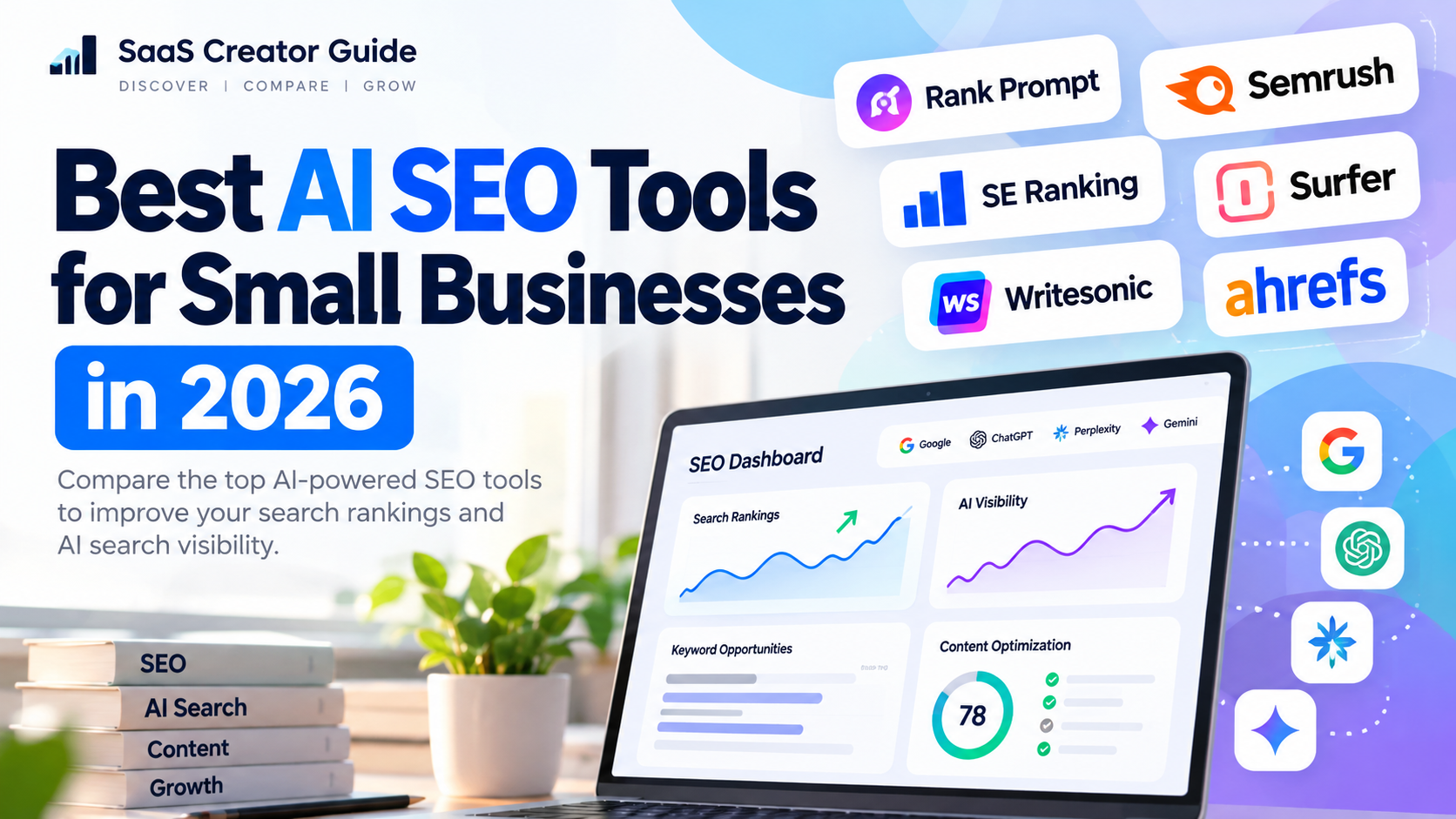
In this guide, we compare six tools that approach AI SEO from different angles: Rank Prompt, Semrush, SE Ranking, Surfer, Writesonic, and Ahrefs.
Whether you want an affordable AI-focused platform, advanced SEO research, better content optimization, or visibility tracking across platforms such as ChatGPT and Google AI, these tools offer different ways to improve your search strategy.
Quick Comparison: Best AI SEO Tools for Small Businesses
| Tool | Best For | Key Strength | Starting Price* |
|---|---|---|---|
| Rank Prompt | Small businesses & founders | AI visibility + SEO workflow | $49/month |
| Semrush | Businesses needing comprehensive SEO | SEO + AI search intelligence | $139/month |
| SE Ranking | Growing SEO teams | SEO + GEO in one platform | $129/month |
| Surfer | Content-focused businesses | On-page content optimization | Varies by plan |
| Writesonic | AI content & search visibility | Content + GEO workflow | $79/month** |
| Ahrefs | SEO research & competitor analysis | Search data + AI visibility | Multiple options |
*Pricing can change. Check each platform’s official pricing page before subscribing.
**Writesonic Starter pricing shown is based on annual billing.
Our Top Picks
The right AI SEO platform depends heavily on what your business is trying to accomplish.
Rank Prompt is particularly interesting for businesses that want to combine AI visibility monitoring with SEO audits, content generation, and optimization workflows.
Semrush provides a much broader SEO ecosystem and is better suited to businesses that want keyword research, competitor analysis, site auditing, rank tracking, and AI search features in one platform.
SE Ranking combines traditional SEO and GEO capabilities with rank tracking, audits, competitive research, and AI prompt monitoring.
Surfer focuses more heavily on improving and optimizing content for search.
Writesonic combines AI-generated content with SEO and AI search visibility features.
Ahrefs remains a powerful option for SEO research while expanding its AI visibility capabilities through Brand Radar.
1. Rank Prompt — Best for AI Visibility and SEO Workflows
Rank Prompt combines AI search visibility monitoring with tools for improving traditional SEO and content.
Instead of only showing whether your brand appears in AI-generated answers, the platform also provides SEO audits, AI article generation, optimization tools, reporting, and integrations with Google Analytics, Search Console, and WordPress.
Its Starter plan is currently $49 per month, with a lower effective monthly price when billed annually.
Key Features
- AI visibility tracking
- SEO audits and optimization
- AI article generation
- Brand audits
- GA4 and Google Search Console integration
- WordPress integration
- AI-powered task workflows
- Outreach tools
Pros
- Combines AI visibility and SEO workflows
- Lower starting price than several enterprise-oriented SEO platforms
- Useful for founders and small teams
- Content creation and optimization tools included
Cons
- Credit-based usage requires some planning
- Businesses focused only on traditional keyword research may prefer a more established SEO suite
- Advanced agency capabilities require higher-tier plans
Who Is Rank Prompt Best For?
Rank Prompt is especially relevant for founders, marketers, and small businesses that want to understand both traditional SEO performance and their visibility across AI search platforms.
It can also be useful for businesses that want to turn visibility insights into actual optimization tasks instead of using a monitoring-only platform.
2. Semrush — Best for Comprehensive SEO and AI Search
Semrush is a comprehensive digital marketing and SEO platform that now combines traditional search optimization with AI search capabilities.
Its SEO tools cover keyword research, competitor analysis, rank tracking, site auditing, and other core SEO tasks. Its current plans also incorporate AI search functionality such as AI visibility reporting, prompt monitoring, and AI-ready site audits.
This makes Semrush particularly useful for businesses that want one established platform covering multiple parts of their organic search strategy.
Key Features
- Keyword research
- Competitor analysis
- Position tracking
- Site audits
- AI visibility reports
- AI prompt monitoring
- AI search competitor insights
- Content optimization tools on eligible plans
Pros
- Extensive SEO toolkit
- Combines traditional SEO with AI search data
- Strong competitor and keyword research capabilities
- Suitable for businesses with more advanced SEO requirements
Cons
- More expensive than some smaller AI SEO platforms
- Large feature set may be excessive for very small businesses
- Learning the full platform can take time
Who Is Semrush Best For?
Semrush is a strong fit for small businesses that take SEO seriously and expect their search strategy to become more sophisticated over time.
It may be particularly useful if you want traditional SEO research and AI search monitoring without managing several separate platforms.
3. SE Ranking — Best for SEO and GEO in One Platform
SE Ranking has evolved from a traditional rank-tracking and SEO platform into a broader SEO and GEO solution.
Its Core plan includes traditional search rank tracking, keyword and competitor research, backlink research, website audits, and AI prompt tracking.
The platform currently supports tracking across multiple AI search environments, making it relevant for businesses that want to monitor both Google rankings and visibility in AI-generated answers.
Key Features
- Search rank tracking
- Keyword and competitor research
- Backlink research
- Website and on-page audits
- AI prompt tracking
- GEO research
- Google Analytics and Search Console integrations
- AI search visibility tools
Pros
- Traditional SEO and GEO features in one platform
- Strong rank-tracking capabilities
- Competitive research tools
- AI search monitoring integrated into the broader SEO workflow
Cons
- Core plan costs more than lightweight AI SEO tools
- Some advanced AI Search capacity is available through additional options
- Smaller businesses may not need all included capabilities
Who Is SE Ranking Best For?
SE Ranking is a good fit for growing businesses and marketing teams that want traditional SEO tools alongside emerging GEO and AI search capabilities.
It sits between lightweight AI-focused tools and larger all-in-one marketing platforms.
4. Surfer — Best for AI-Assisted Content Optimization
Surfer takes a more content-focused approach to SEO.
Rather than trying to replace a complete SEO research platform, Surfer is particularly useful for analyzing and optimizing individual pieces of content.
Its tools can help content teams understand how a page compares with competing search results and identify opportunities to improve structure, topical coverage, and on-page optimization.
Key Features
- Content optimization
- Content Editor
- On-page SEO recommendations
- AI-assisted content workflows
- Content auditing
- Search-focused content analysis
Pros
- Strong focus on content optimization
- Useful for improving existing articles
- Designed around practical on-page recommendations
- Helpful for content-heavy websites
Cons
- Not a complete replacement for a broad SEO suite
- Costs can add up for businesses producing large amounts of content
- Less focused on overall brand visibility than dedicated AI visibility tools
Who Is Surfer Best For?
Surfer is particularly useful for small businesses that already publish blog content and want a structured way to improve on-page SEO.
It can complement a broader SEO research platform rather than replace one.
5. Writesonic — Best for AI Content and Search Visibility
Writesonic has expanded beyond AI writing into a platform combining content creation, SEO, and AI search visibility.
Its current Starter plan includes AI visibility tracking across major AI search experiences alongside AI articles and site audits.
Higher-tier plans expand the number of tracked prompts, articles, audits, and optimization workflows.
Key Features
- AI article generation
- AI search visibility tracking
- Site audits
- Content and SEO tools
- Prompt tracking
- Brand visibility monitoring
- Agentic SEO workflows on eligible plans
Pros
- Combines content generation and search visibility
- Useful for businesses producing content regularly
- Tracks visibility across major AI search platforms
- Connects content creation with optimization
Cons
- More expensive than basic AI writing tools
- Some advanced functionality requires higher-tier plans
- Businesses that already have a content workflow may not need all features
Who Is Writesonic Best For?
Writesonic is a good fit for businesses that want AI to play a significant role in both content production and search optimization.
It is especially relevant for teams that want to create content and monitor emerging AI search visibility from the same environment.
6. Ahrefs — Best for SEO Research and Competitive Intelligence
Ahrefs is widely used for SEO research and has expanded its capabilities to include AI search visibility.
Its traditional tools cover areas such as keyword research, backlink analysis, competitor research, site auditing, and rank tracking.
Ahrefs Brand Radar adds another layer by helping businesses investigate how brands appear across AI-generated answers and track selected prompts.
Key Features
- Keyword research
- Backlink analysis
- Competitor research
- Site auditing
- Rank tracking
- AI visibility analysis
- Custom AI prompt tracking
- Brand Radar
Pros
- Extensive SEO research data
- Strong backlink and competitor analysis
- Combines traditional SEO research with AI visibility
- Useful for understanding both websites and brands
Cons
- Full AI visibility functionality can increase overall cost
- May be excessive for businesses with very basic SEO requirements
- AI visibility features have their own limits and pricing structure
Who Is Ahrefs Best For?
Ahrefs is particularly useful for small businesses that want deep SEO research and competitor intelligence while also beginning to explore AI search visibility.
Businesses already using Ahrefs can also take advantage of included custom AI prompt allowances on eligible paid plans before deciding whether they need additional AI visibility capacity.
What Is AI SEO?
AI SEO generally refers to using artificial intelligence to improve how websites and content perform in search.
That can include using AI for keyword research, content creation, content optimization, technical analysis, competitor research, and workflow automation.
However, the definition is expanding.
Search visibility is no longer limited to traditional search engine results pages. Consumers increasingly encounter answers generated by AI systems, which means businesses may also want to understand whether their brands and websites are being mentioned or cited in those answers.
This has led to growing interest in terms such as GEO (Generative Engine Optimization) and AEO (Answer Engine Optimization).
Traditional SEO vs AI Search Visibility
Traditional SEO focuses largely on improving visibility in search engine results.
Common activities include:
- Keyword research
- Technical SEO
- Link building
- Content optimization
- Rank tracking
- Competitor analysis
AI search visibility focuses on how brands and content appear inside AI-generated answers.
That can involve monitoring:
- Brand mentions
- Website citations
- AI-generated recommendations
- Competitor visibility
- Important prompts
- Sources referenced by AI systems
The two areas increasingly overlap.
A strong website, useful content, authoritative mentions, and solid technical foundations can matter across both traditional search and AI-powered discovery.
If you want to explore this area specifically, read our guide to the best AI visibility tools for ChatGPT and AI search.
How to Choose an AI SEO Tool for Your Small Business
Before paying for an AI SEO platform, identify the problem you actually need to solve.
Start With Your SEO Goals
If your primary goal is traditional keyword research, competitor analysis, and technical SEO, a broad platform such as Semrush, SE Ranking, or Ahrefs may make sense.
If AI visibility is becoming a priority, Rank Prompt or another AI-focused platform may be more relevant.
If content optimization is your biggest challenge, Surfer provides a more specialized workflow.
Consider Your Budget
SEO platforms vary significantly in price.
A small business running one website may not need the same data limits and reporting features as an agency managing dozens of clients.
Compare the features you will actually use instead of choosing the platform with the longest feature list.
Think About Content Production
Businesses publishing frequently may benefit from platforms that combine content creation and optimization.
Rank Prompt and Writesonic include AI content workflows, while Surfer focuses heavily on optimizing content for search.
Consider AI Search
If customers may discover products and services through ChatGPT, Google AI experiences, Perplexity, Gemini, or other AI platforms, AI visibility monitoring may become increasingly useful.
Not every business needs extensive prompt tracking today, but understanding this shift can help you choose software that can grow with your search strategy.
Which AI SEO Tool Should a Small Business Choose?
There is no single tool that fits every small business.
Rank Prompt is particularly relevant for businesses interested in combining AI visibility with SEO and content workflows.
Semrush provides a comprehensive environment for businesses that need deeper traditional SEO research alongside AI search capabilities.
SE Ranking offers a combination of SEO, rank tracking, and GEO features.
Surfer focuses on content optimization.
Writesonic combines AI content creation with search visibility tools.
Ahrefs provides extensive SEO research capabilities alongside its expanding AI visibility ecosystem.
The best choice depends on your budget, existing SEO experience, content strategy, and how important AI search visibility is to your business.
Frequently Asked Questions
What are the best AI SEO tools for small businesses?
Popular options include Rank Prompt, Semrush, SE Ranking, Surfer, Writesonic, and Ahrefs. Each platform focuses on different areas, including traditional SEO research, content optimization, AI content creation, and AI search visibility.
Can small businesses use AI for SEO?
Yes. Small businesses can use AI to assist with keyword research, content planning, on-page optimization, technical audits, competitor analysis, and content creation. AI can reduce some manual work, but human review and a clear SEO strategy are still important.
What is the difference between SEO and GEO?
SEO traditionally focuses on visibility in search engine results, while GEO focuses on improving visibility in AI-generated and generative search experiences. The two disciplines overlap because useful content, authority, and technical website quality can influence both types of discovery.
Can AI SEO tools guarantee higher rankings?
No. SEO tools can provide data, recommendations, automation, and analysis, but they cannot guarantee search rankings. Search performance depends on many factors, including competition, content quality, website authority, technical health, and search engine changes.
Do I need an AI visibility tool if I already use an SEO platform?
Not necessarily. Some traditional SEO platforms are adding AI search monitoring directly into their products. Whether you need a separate tool depends on how deeply you want to track AI mentions, citations, prompts, and competitors.
Final Thoughts
Search is changing, and the tools businesses use to manage SEO are changing with it.
The best AI SEO tools for small businesses increasingly combine traditional search optimization with AI-assisted workflows and, in some cases, visibility monitoring across AI-generated answers.
Instead of choosing a platform simply because it offers the most features, focus on the specific problems your business needs to solve.
For some businesses, that may mean better keyword and competitor research. For others, it may mean faster content optimization or understanding whether their brand appears in AI search.
As AI-powered discovery continues to develop, choosing a tool that can support both your current SEO strategy and future search visibility can help you adapt without rebuilding your entire workflow.
「Best AI SEO Tools for Small Businesses in 2026」への2件のフィードバック